Community of Madrid: discover experiences beyond the capital
Madrid does not end at the M-30 ring road. Less than an hour from the city, the Community of Madrid reveals other ways of exploring the region, offering experiences far removed from the pace of the capital. Monasteries that once stood at the heart of an empire, historic squares that have preserved their scale for centuries, mountains where you can disappear for an entire day, and villages that are not simply places to read about — they are places to walk through and experience.
Chinchón, the town that gave its name to a remedy and a celebration
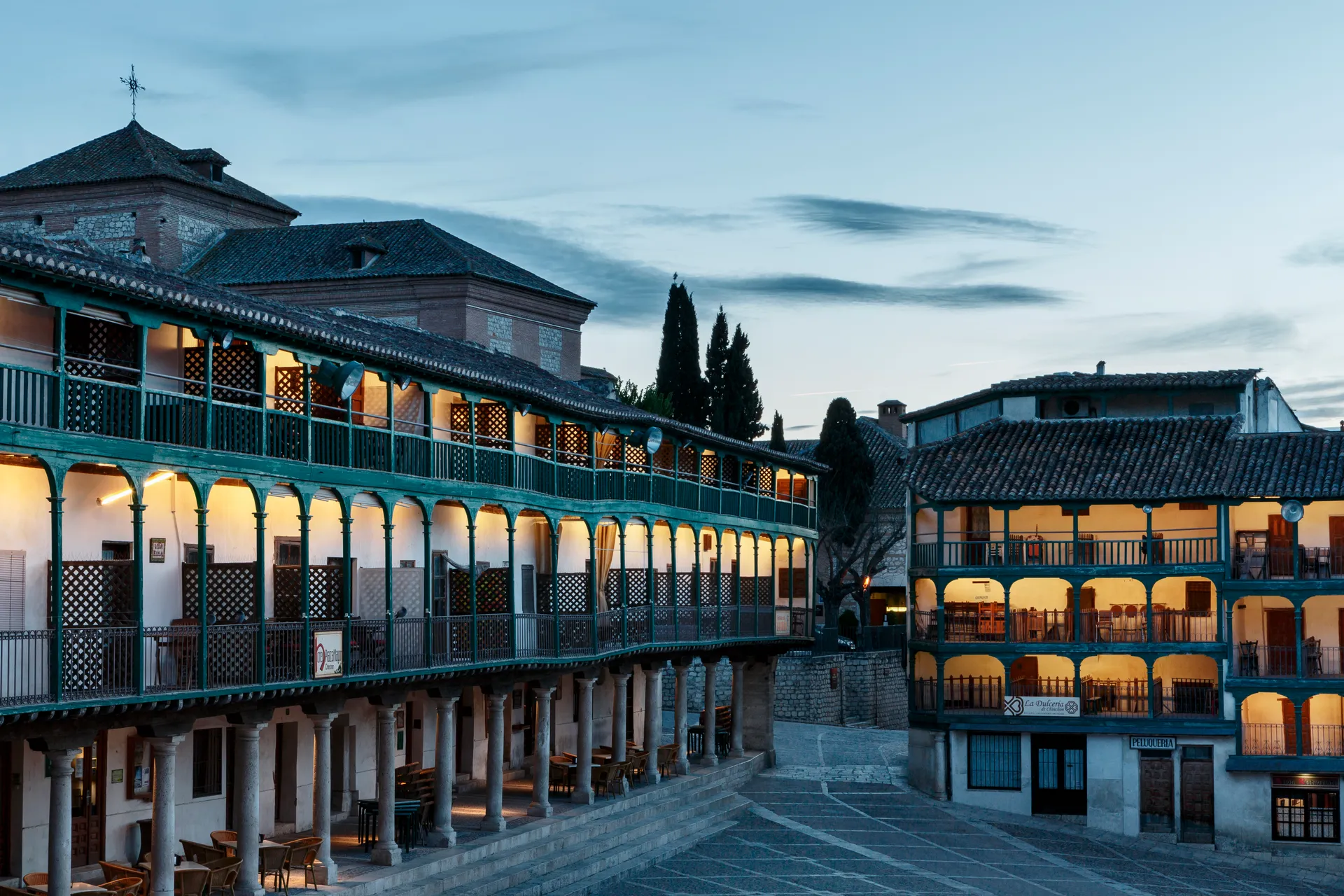
Less than an hour from Madrid, in the Las Vegas region, Chinchón moves at a very different pace from the capital. This small town of barely six thousand inhabitants has had its historic centre protected since 1974, a status that explains the harmony found throughout its streets: the heights of its buildings, its wooden balconies, and the relationship between squares, churches and alleyways all tell the same story.
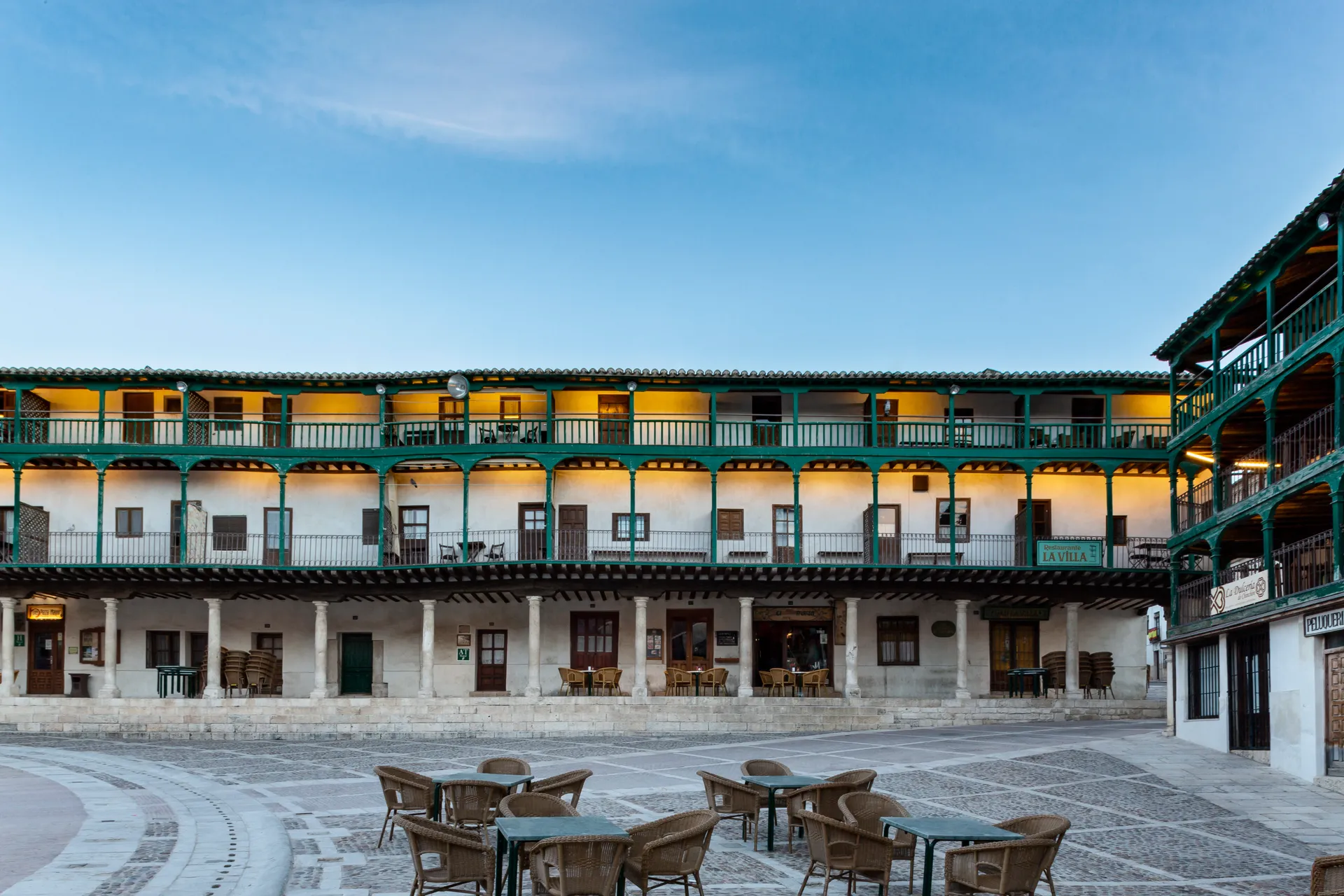
Its reputation comes from more than one source. There is the Plaza Mayor, an irregular, enclosed square surrounded by arcades and more than two hundred green-painted wooden balconies, which have served for centuries as a setting for festivals, bullfights and film productions. And above all, there is Holy Week. Legend has it that the Countess of Chinchón, vicereine of colonial Peru, was cured of a fever thanks to quinine, the bark of a tree that would later revolutionise European medicine in the fight against malaria — and would forever carry the town’s name. But the true highlight is the Passion of Chinchón, declared a Festival of National Tourist Interest: every Holy Saturday, local residents recreate the Passion of Christ through the town’s streets and the Plaza Mayor itself, which becomes a real-life stage with no scenery or seating between the performers and the audience.
Chinchón does not need to promote itself; it is a place to wander and observe. The former Augustinian convent, now transformed into a Parador hotel, the castle of the Counts overlooking the town, the Clock Tower with its curious saying about the church that never had its own bell tower, and the aniseed liqueur that proudly bears the town’s name all complete a visit that feels like a Sunday escape, even in the middle of the week.
Three ways to spend a day in Chinchón: Begin at the Plaza Mayor, taking your time to enjoy the shade of the arcades and, if hunger calls, find a table at one of the restaurants with balconies overlooking the square. Continue up to the Church of Nuestra Señora de la Asunción, home to a painting attributed to Goya, and from there make your way to the Clock Tower to discover the local saying behind it before wandering aimlessly through the cobbled streets of the historic centre. End the day with a traditional wood-fired roast or a bowl of garlic soup, accompanied by a local anise liqueur, before losing yourself among the streets surrounding the former convent.
San Lorenzo de El Escorial, the town Felipe II built for the scale of an empire
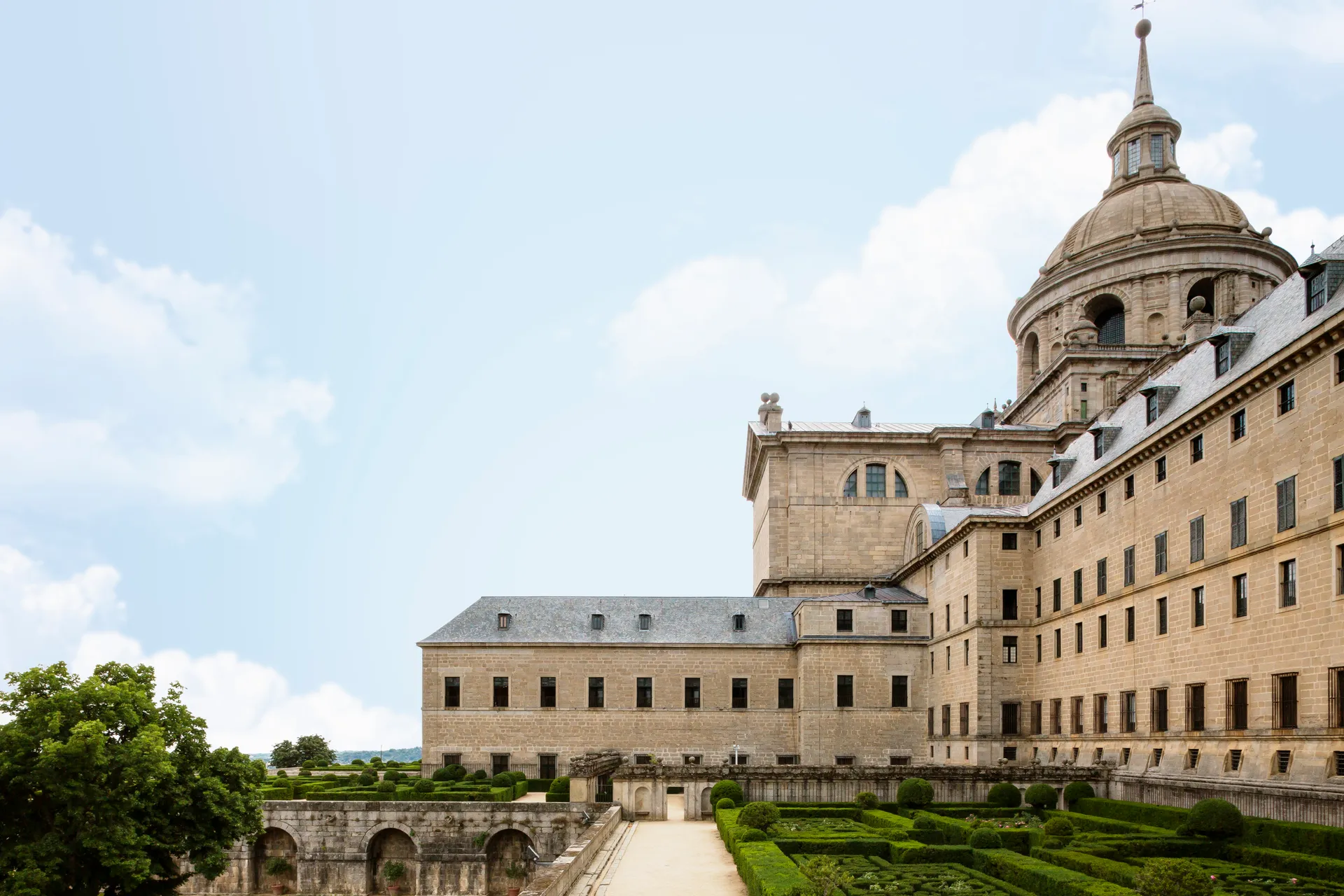
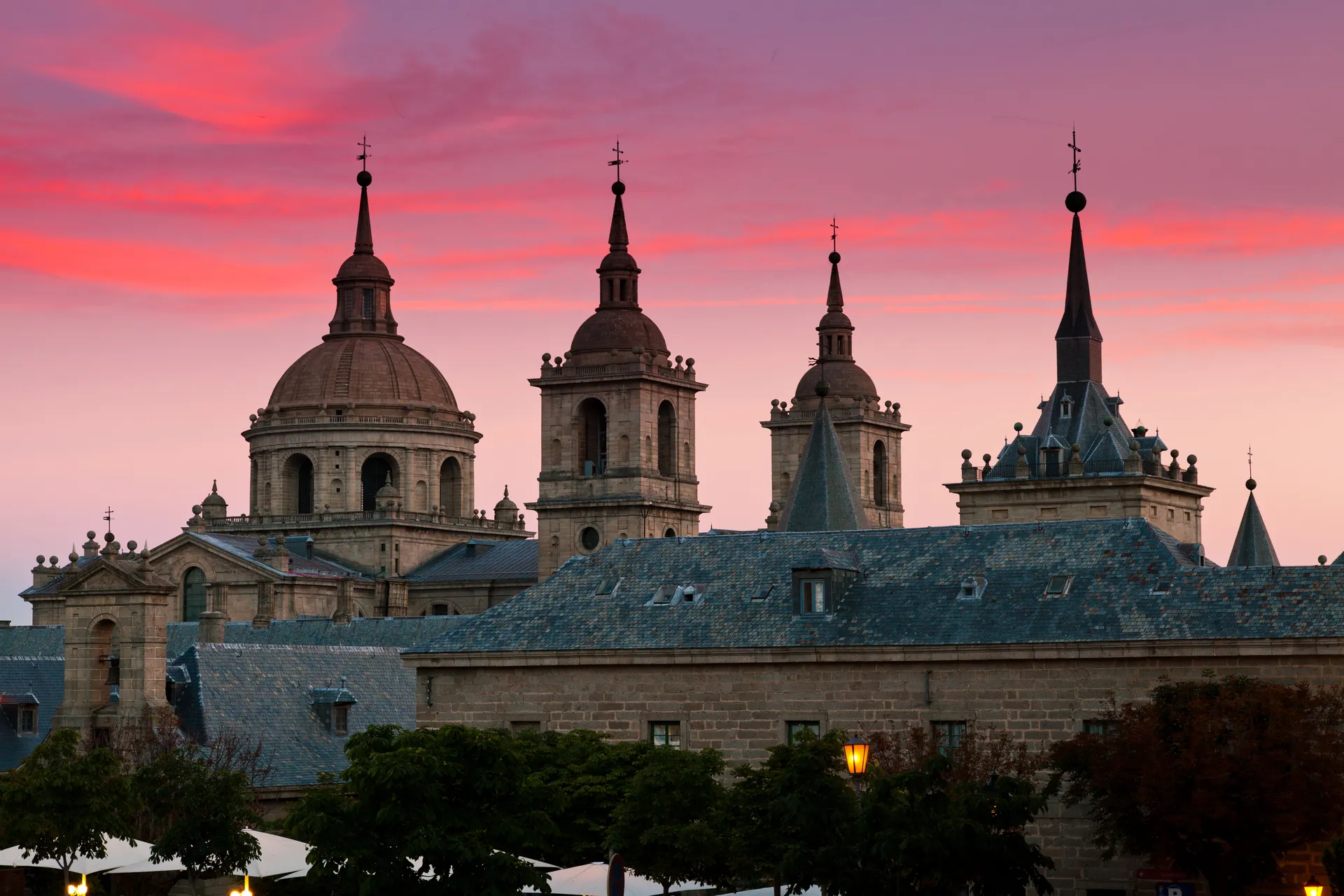
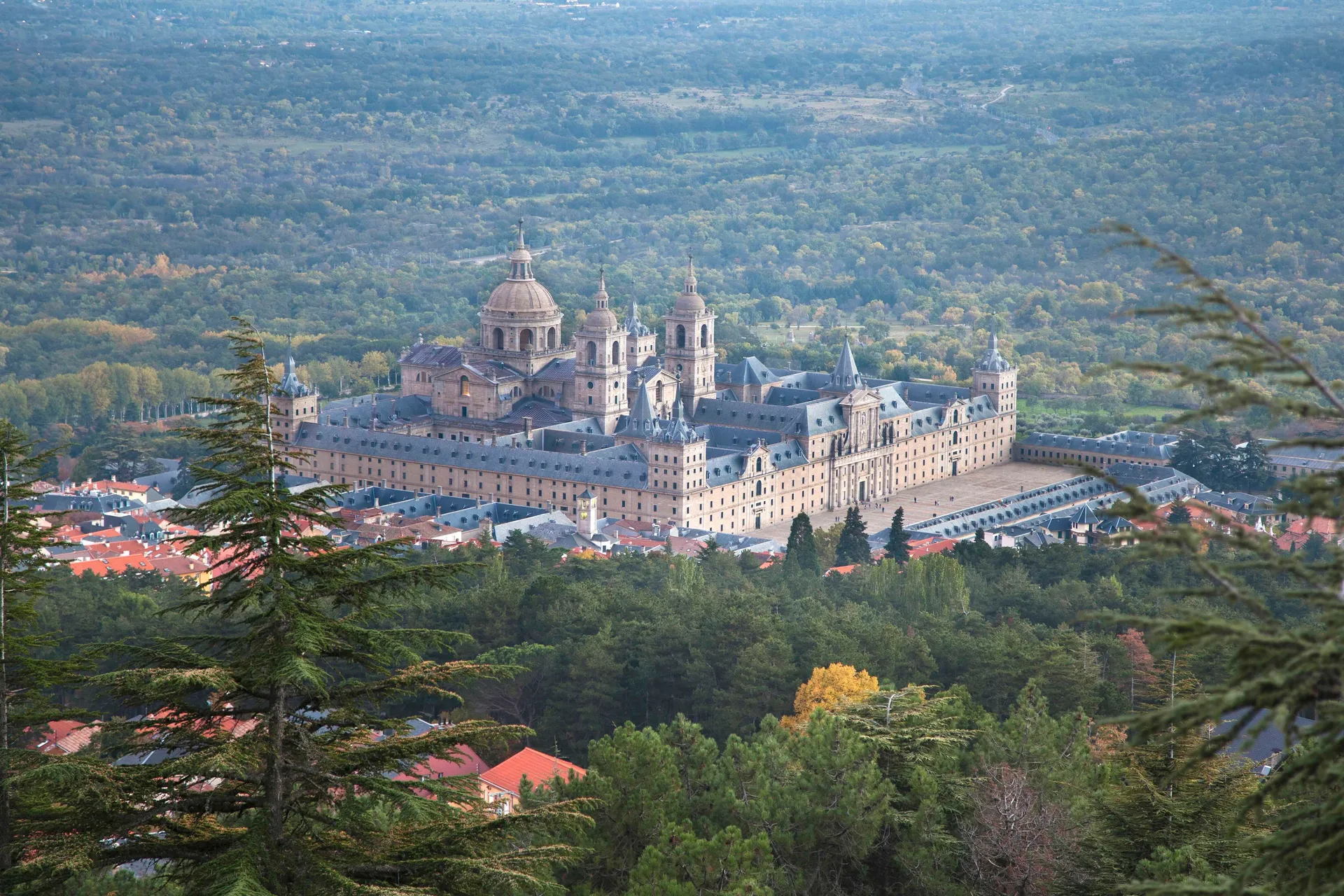
Just under fifty kilometres from Madrid, at the foot of the Sierra de Guadarrama, lies San Lorenzo de El Escorial. It can be reached by commuter train or, for a more historic journey, aboard the Felipe II Train, a 1940s locomotive that crosses the mountain landscape as if time itself had been left behind. The town grew around a decision made by Philip II: to build, in the mid-16th century, a monastery that would serve simultaneously as a royal pantheon, a school and a spiritual centre. The project was begun by Juan Bautista de Toledo, a disciple of Michelangelo, and completed by Juan de Herrera, whose work gave its name to an entire architectural style: Herrerian architecture. Its austere lines and geometric purity were so remarkable that contemporaries described it as the eighth wonder of the world.
Its fame is above all linked to the monastery, declared a UNESCO World Heritage Site in 1984. Inside, it houses a library with thousands of manuscripts, royal burial chambers, palaces and a basilica decorated with frescoes by Luca Giordano. Yet the town that grew in its shadow has far more to offer beyond this essential visit. Here, Felipe II once sat on a chair carved into the rock to personally oversee the construction works — a viewpoint that still offers one of the finest panoramas of the surrounding mountains. Centuries later, San Lorenzo remains a town with a life of its own, not merely a backdrop for visitors: it is home to the oldest active covered theatre in Spain, royal gardens and a natural environment stretching across more than fifty square kilometres of forests and mountains.
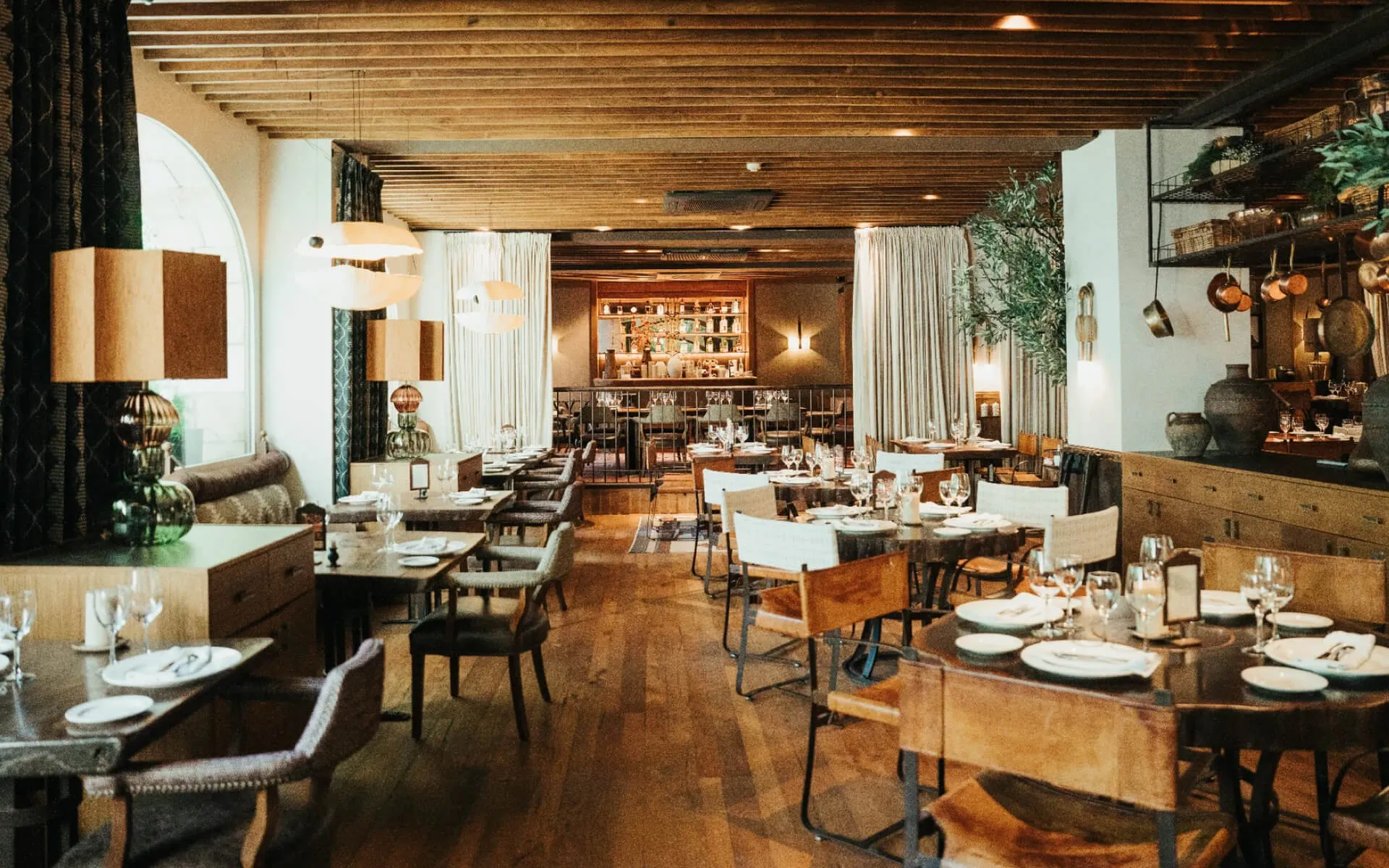
San Lorenzo is worth visiting because it works on every timescale: it can be explored in a single day or enjoyed over several days without exhausting its possibilities. The Herrería Forest invites you to walk at a slower pace, the Plantel neighbourhood hides early 20th-century villas rarely discovered by tourists, and the local dining scene — from Michelin-starred cuisine to mountain-grown meats — offers every reason to stay until sunset, when the basilica’s silhouette rises against the sky and the entire town seems to belong to another era.
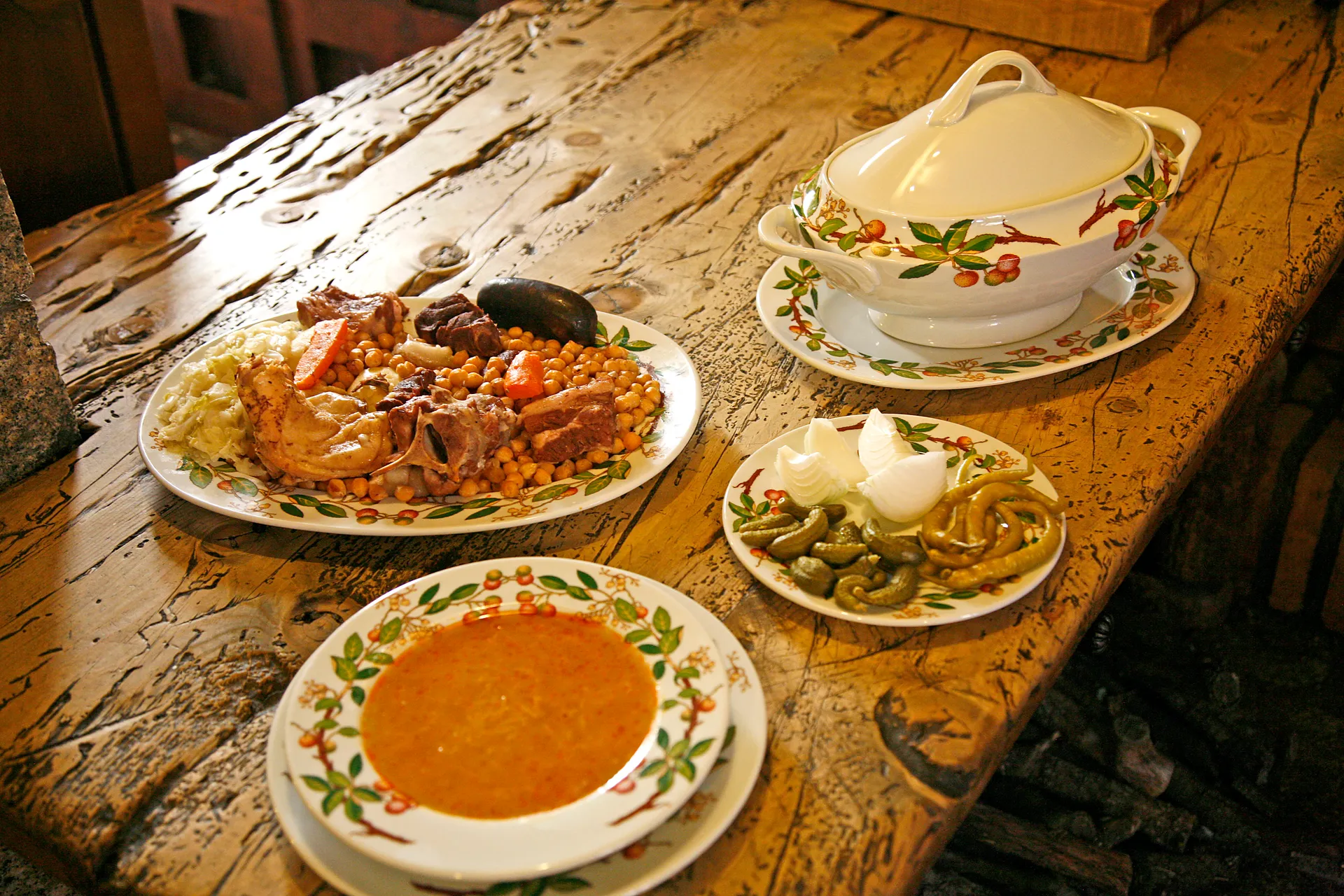
Three ways to spend a day in San Lorenzo de El Escorial: Begin with the Royal Monastery, even if only to understand why it was once considered the eighth wonder of the world. Then make your way up to the Chair of Philip II, crossing the Herrería Forest along a short walk that rewards you with one of the finest panoramic views of the Sierra de Guadarrama. Continue the morning at Cocheras del Rey, a private museum showcasing royal carriages, sledges and travel objects from the court, with the unique touch that the owners themselves personally introduce visitors to the collection. To end the day, enjoy a traditional fifteen-course cocido at El Charolés or experience the zero-kilometre philosophy of Montia. Before leaving, make sure to try a bizcotela, a delicate sweet with more than 250 years of history and a true speciality of San Lorenzo de El Escorial.